
In 2026, the era of the “one-size-fits-all” auto insurance premium has officially come to an end in the Lowcountry. For years, Bluffton residents—whether commuting from New Riverside or enjoying retirement in Sun City—were grouped into broad risk categories based on age, ZIP code, and credit score. Today, the industry has shifted toward hyper-personalization, driven by the rapid adoption of Usage-Based Insurance (UBI) and telematics. This technology is fundamentally changing the financial landscape for local drivers, moving the needle from generalized “group risk” to individualized “real-world behavior.”
The most dominant trend for 2026 is the widespread embrace of Pay-As-You-Drive (PAYD) models. This shift has proven particularly beneficial for Bluffton’s unique demographic mix. Remote workers, who now make up a significant portion of our local workforce, and retirees who primarily use their vehicles for short trips to Old Town or the grocery store, are no longer penalized for the high-mileage risks of a typical daily commuter. By paying only for the miles they actually cover, these low-mileage drivers are seeing their annual costs drop significantly, often decoupling their financial responsibility from the heavy traffic congestion seen during the peak tourist seasons on Highway 278.
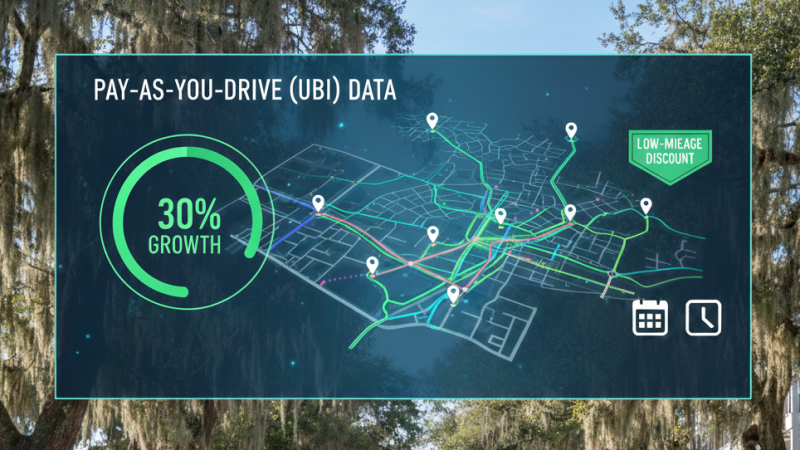
Beyond simple mileage, behavioral tracking has seen a staggering 30% growth in our region over the last year. Modern telematics programs now monitor specific driving metrics such as braking intensity, cornering speed, and rapid acceleration. In a community like Bluffton, where navigating narrow residential streets and frequent roundabouts requires a high degree of attentiveness, these programs reward cautious habits with tangible results. Safe drivers who consistently demonstrate smooth, predictable behavior behind the wheel are now unlocking significant discounts, ranging from 10% to 25%. This “pay-how-you-drive” approach effectively turns a driver’s safety record into a personal currency, providing a powerful incentive to maintain the calm, patient driving style that defines the Lowcountry pace of life.
However, as these data-driven policies become the norm, a distinct “trust gap” has emerged regarding how this information is collected. While many national insurers initially pushed for mobile app-based tracking, Bluffton residents in 2026 are increasingly pushing back against the battery drain and perceived privacy intrusions of smartphone monitoring. Instead, there is a clear local preference for data collected directly by the vehicle’s onboard computer. This “direct-from-car” data sharing is seen as more reliable and less intrusive, as it focuses strictly on the vehicle’s performance rather than the driver’s phone usage or location habits outside of the car.
As we move deeper into 2026, the message for Blufftonites is clear: your premium is no longer a static number determined by your neighbor’s habits. By leveraging telematics, you can ensure that your insurance costs reflect your specific lifestyle, rewarding you for the miles you don’t drive and the caution you show when you do. For a community that values both its privacy and its pocketbook, this transition to hyper-personalized insurance represents a significant step toward a fairer, more transparent way to stay protected on the road.